What Community Banks Were Actually Talking About in Sun Valley (UBA Conference 2026 Recap)

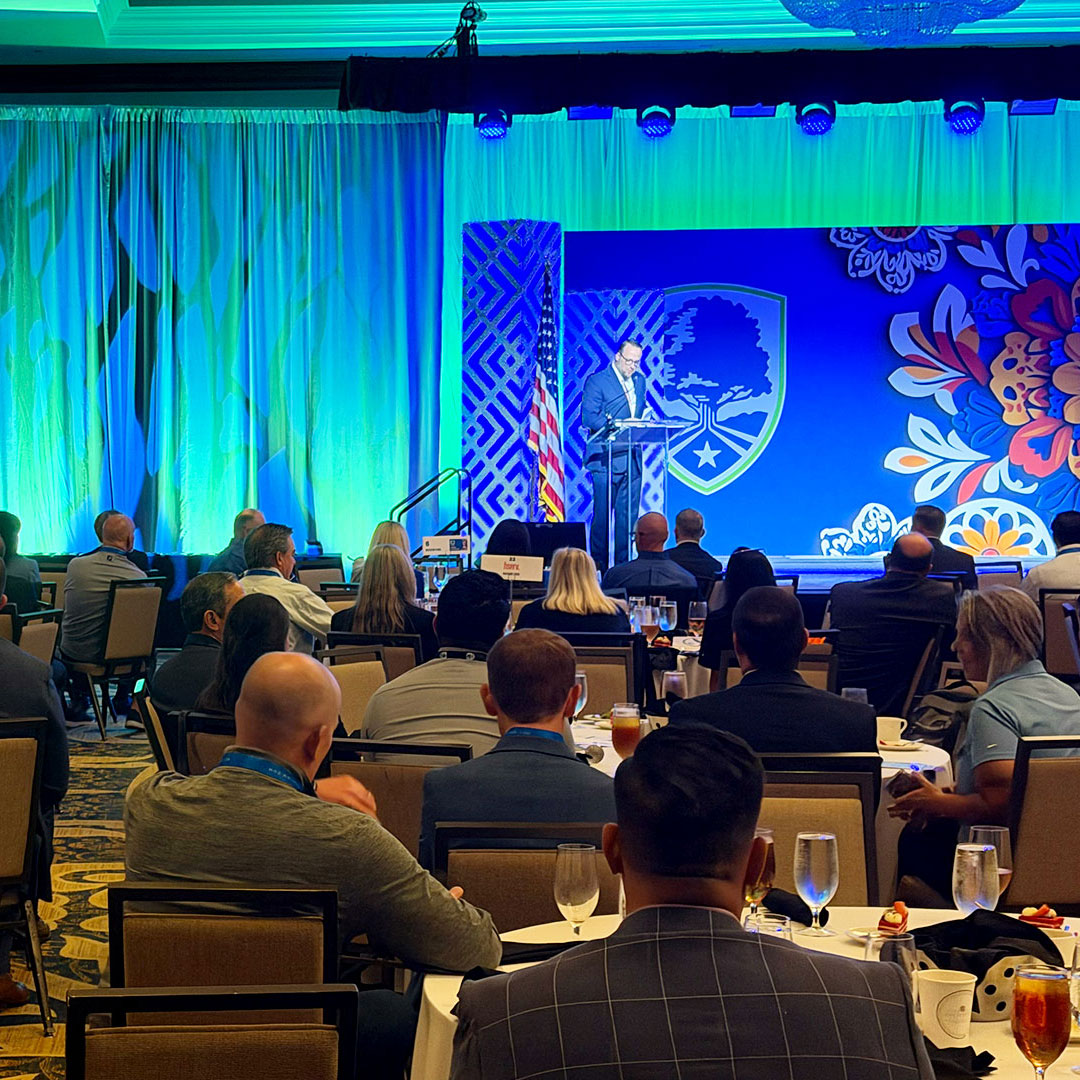
I keep coming back to Sun Valley, and I keep leaving with the same feeling. Amazing place. Amazing weather. Amazing people.
Utah Bankers Association's Annual Convention is one of my favorite events on our calendar, not because of any specific session, but because of who's in the room and what they're willing to talk about honestly. Some of my best conversations this year happened nowhere near a session room. A round of golf with a handful of bankers does more for a relationship than a slide deck ever will.
Dave Martin opened the business sessions with a talk called "Good People Win." It's a good way to think about an industry built as much around relationships as accomplishments and goals.
Then came the stablecoin panel, more or less the same as I caught last year. Alex Treece was back, alongside a representative from the American Bankers Association, this time interviewed by the UBA president himself. It was a good session, run by people who know the space cold. What struck me is that two years running, the room still hasn't warmed up to the stablecoin conversation. No fault of the panel. I just believe most community banks still haven't found the use case that makes stablecoins worth the lift.
Here's the thing though: that's true of many fintech initiatives, not just stablecoins. Whatever the project is, the rollout is only as good as your data.
That answer showed up twice on the agenda, just not under the stablecoin banner. Adam Schlesinger of LeapFI.AI opened his talk on what he called "AI industrialization," the shift from AI as an experiment to AI as infrastructure a bank actually runs on. The framing that stuck with me: most community banks aren't behind on AI because they lack tools. They're behind because they haven't decided what AI is supposed to be doing for them yet. Tools without a foundation just add noise.
That's the same conversation we have with banks every week, just from a different angle. The tools are ready. The question is whether the data underneath them is.
The other session that mattered more than the stablecoin panel was Christopher Bramwell's. Bramwell is Utah's Chief Privacy Officer, appointed by Governor Cox to stand up the state's Office of Data Privacy, and he helped write Utah's Government Data Privacy Act. Hearing him lay out where state privacy law is headed, in the same building as a room full of community bankers, was a reminder that data governance isn't an IT problem anymore. It's a board-level conversation, and Utah is one of the states writing the rules in real time.
Put those two sessions next to the stablecoin panel and you get a clearer picture of where these banks' attention actually is. Banks are being asked to move faster on AI and get more disciplined on data privacy, at the same time, often with the same team. It's really one problem viewed from two directions. You can't do responsible AI on top of ungoverned data. You can't satisfy a regulator like Bramwell if your data trail doesn't hold up. Fix the foundation and both conversations get shorter.
Book a discovery call | See a case study