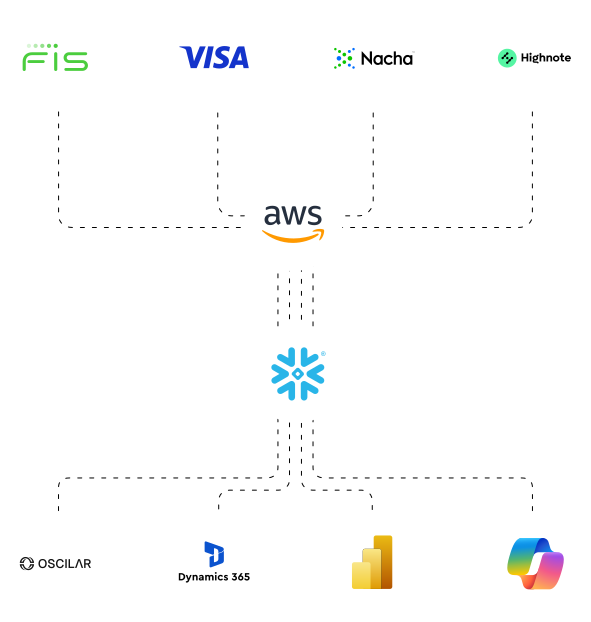
FIS to Snowflake: Modernizing Core Banking Data for Reporting, AML, and Analytics




Trusted by 30+ banks modernizing their data




















FIS core systems iDENTIFY works with
iDENTIFY integrates with leading FIS core platforms, supporting the data needs of modern banks.
HORIZON
IBS (Integrated Banking Solution)
Modern Banking Platform







What does it mean to move FIS data to Snowflake?
Moving FIS data to Snowflake means extracting core banking, payments, and investment data from FIS platforms, centralizing it into a secure cloud data platform, and enabling governed analytics, reporting, and data sharing across the bank from a single source of truth.
Banks adopt this approach to enable real-time insights, scalable analytics, and consistent regulatory reporting across systems.

iDENTIFY at a Glance
processors mapped
major AML/BSA systems integrated
transactions cleaned daily
active client banks across the U.S.
Why FIS data creates challenges for modern banking
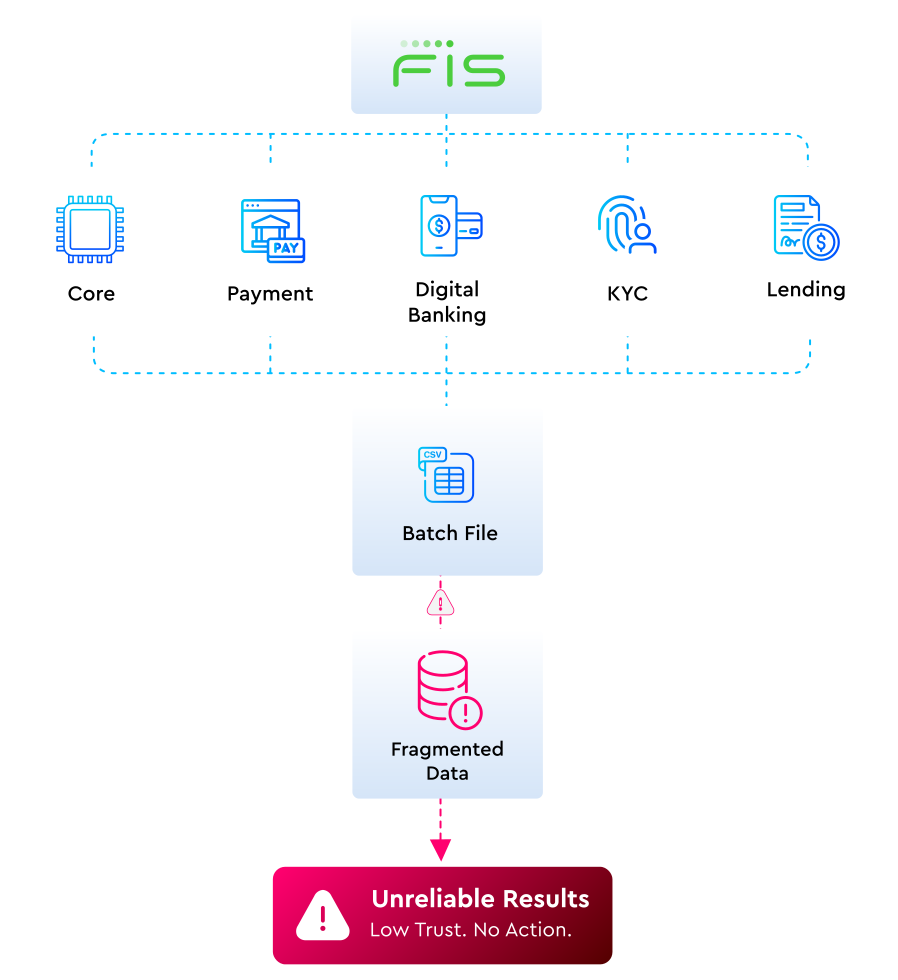
FIS platforms support core banking, payments, and capital markets operations at scale. However, data is often distributed across multiple systems, batch feeds, and downstream applications, making it difficult to unify, govern, and trust.
As reporting requirements grow and fintech ecosystems expand, these limitations create operational friction and compliance risk.
- Batch-based data delays limit real-time visibility
- Disconnected systems create inconsistent reporting
- Manual reconciliation across core, payments, and downstream systems
- Limited data lineage and audit traceability
- Inconsistent inputs into AML and fraud monitoring systems
Build a unified data foundation for FIS in Snowflake
Snowflake provides a scalable, secure cloud platform designed for financial services data. It enables banks to centralize FIS data across core systems, payments, and investment platforms while supporting secure data sharing and high-performance analytics.
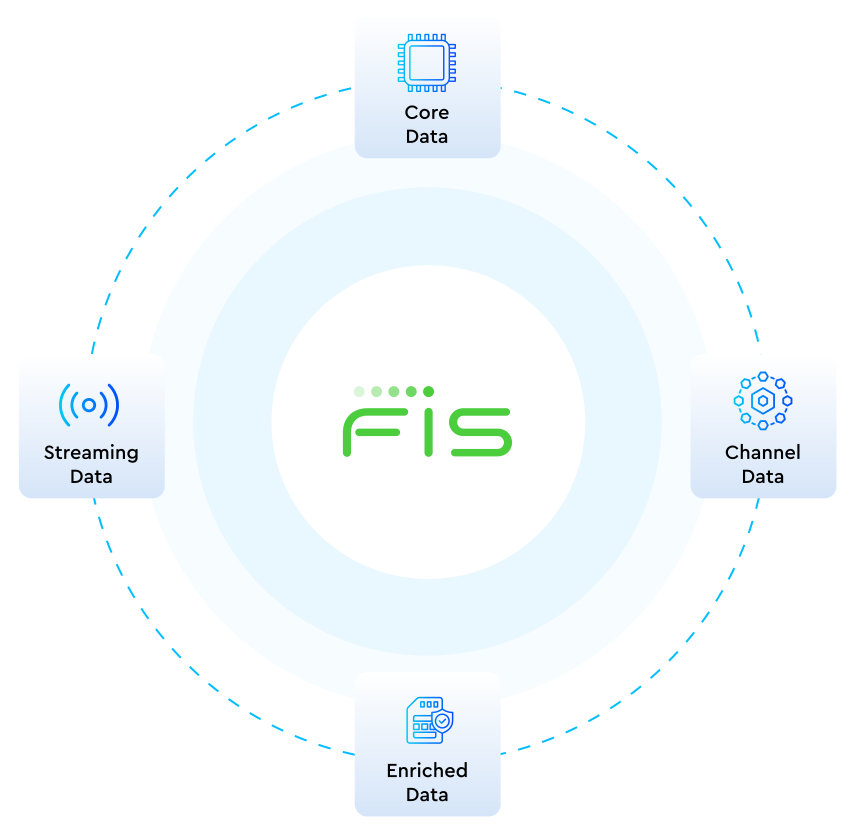
FIS itself has embraced modern data platforms to enable enterprise-wide data access, analytics, and digital transformation.
iDENTIFY extends this by:
- Validating data at ingestion
- Standardizing data across systems
- Enforcing governance, lineage, and access controls

Already exploring FIS Horizon?
FIS Horizon is FIS’s native data product built on Snowflake. It’s a meaningful step toward centralizing your core data — and banks who’ve heard about it are asking the right questions. The honest reality: based on the last public information from FIS, Horizon is in early rollout with just a handful of banks piloting. Most FIS banks don’t have access yet.
Where banks are seeing constraints:
- FIS Horizon is still in early pilot — most FIS banks don’t have access yet
- Banks are hearing timelines from FIS that feel far from reality
- No guarantee of when your bank will be included in the rollout
- Waiting on FIS means delaying the compliance and reporting your teams need now
How iDENTIFY approaches it differently:
- Move your FIS data into Snowflake now — on your timeline, not FIS’s
- Your own governed Snowflake environment — your bank owns it
- Validation, standardization, and unified data models built in
- Full data history with no artificial lookback limits

How FIS → Snowflake architecture works
FIS data extraction
Core banking, payments, and investment systems provide data via feeds, APIs, and batch processes.
Data Ingestion Pipeline
Data is securely ingested into Snowflake using batch, CDC, or streaming pipelines.
Validation at Ingestion
Data quality checks, schema enforcement, and business rules are applied immediately.
Standardization Layer
Data is normalized across systems into consistent definitions and formats.
Unified Data Models
Clean, reconciled datasets are structured for reporting, AML, and analytics.
Consumption Layer
Trusted data powers regulatory reporting, AML systems, dashboards, analytics, and AI use cases.
What this architecture enables
Snowflake’s architecture enables secure, real-time data sharing without duplication, improving access and collaboration across teams.
- Centralized FIS data across core, payments, and capital markets
- Validation at ingestion before data reaches downstream systems
- Standardized data models across all platforms
- Built-in data lineage and auditability
- Real-time visibility into data quality and issues
- Secure data sharing across teams without duplication

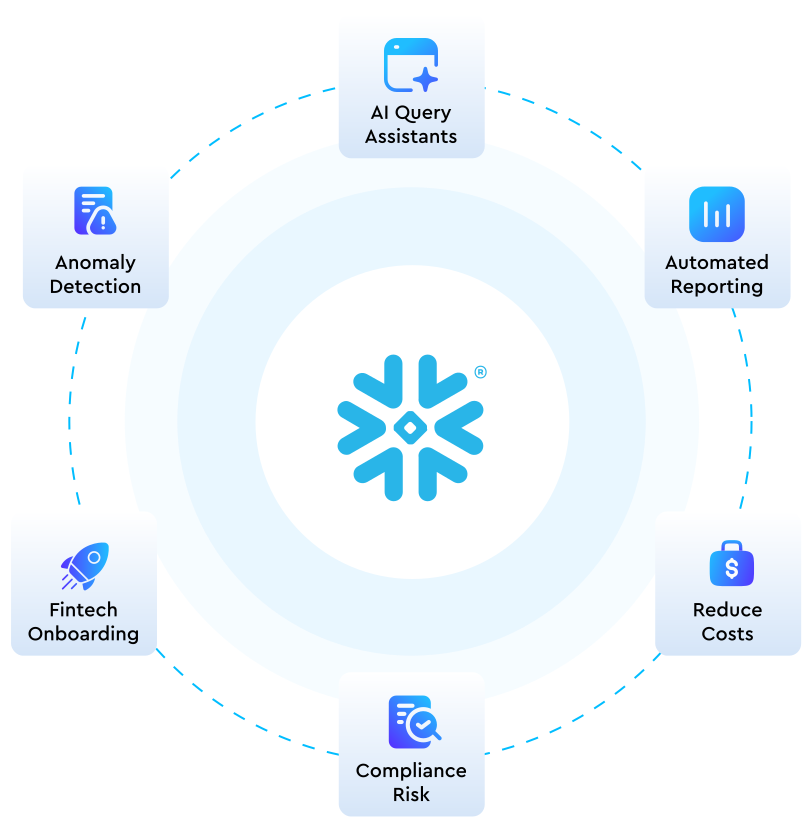
Where FIS → Snowflake delivers value
Risk mitigation
Data Compliance
Core Modernization
Fintech Onboarding
Customer 360
AI Readiness
What iDENTIFY does with your FIS data


Outcomes for banks
Centralizing data enables faster decision-making and better insights across the organization.
- Faster and more reliable reporting
- Reduced audit findings and compliance risk
- Improved AML accuracy and consistency
- Scalable fintech and partner integration
- Lower operational overhead and manual effort
- Better enterprise-wide data visibility

Frequently Asked Questions

Banks extract FIS data from core, payments, and investment systems, ingest it into Snowflake, validate and standardize it at ingestion, and use it for reporting, AML, and analytics.
Snowflake centralizes fragmented data, enables secure data sharing, and supports scalable analytics and regulatory reporting across banking systems.
Yes. Snowflake works alongside FIS, allowing banks to modernize their data architecture without replacing core systems.
It eliminates data silos, reduces reporting delays, improves data consistency, and ensures audit-ready reporting.
Core banking, payments, lending, custody, trading, and investment data can all be centralized into Snowflake.
iDENTIFY supports FIS HORIZON, IBS (Integrated Banking Solution), and the FIS Modern Banking Platform. HORIZON is the most widely used FIS core for community banks. IBS serves community to large regional banks. All three can be extracted, validated, and migrated into Snowflake using iDENTIFY’s governed pipeline.
FIS Horizon is FIS’s Snowflake-native data product, currently in early rollout. Based on the last public information from FIS, only a handful of banks are piloting it and banks are hearing timelines that don’t match reality. iDENTIFY moves your FIS data into Snowflake now — validated, governed, and on your timeline, not FIS’s. If and when FIS Horizon becomes widely available, iDENTIFY’s governed data layer complements it rather than competing with it.